Monday, 18 January 2010

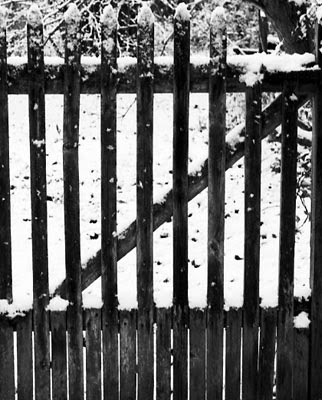
Christmas 2009


A handful of photos from Chrismas Eve
over Christmas my mother was very unwell
~ a quiet time, and still; the first Christmas with snow for a long while


All Images ⓒ Cate McRae


Saturday, 5 September 2009

Dubrovnik in August : War Photo Limited


When we arrived in Dubrovnik we stayed one night and the next morning made our way quickly away from the heat and dust of the tourists to our quieter destination. Returning, a the end of our stay, we were more acclimatised and prepared to deal with the crowds as an inevitable part of being able to walk around the unique and magical Old Town of Dubrovnik. Walking the old Wall of the City in the heat of the day was not the easiest thing to do even so, especially as exits are few – once you are there, you continue, unless you choose to refresh yourself at a couple of crowded bars along the way, which we avoided.

Not the best time to visit, but sometimes there is no choice. And the walkways are still made of marble, in high August, the churches and museums and monasteries still cool and mysteriously quiet.

Somehow this day crystalised my feelings about visiting Croatia. Firstly, my discomfort at being primarily, inevitably, a tourist rather than a traveler on this short visit (to unwind and relax after various stresses and strains including a recent health issue in our little family group). Secondly, a feeling of not knowing how to correlate this holiday experience with the recent traumatic past suffered by the region during the breakup of the former Yugoslavia.

I found the Croatian people I met (it sounds a cliché but it was real enough) calm, warm and welcoming – seemingly pleased to see us. Dignified. No problem on their side with tourism. Yet there was a tangible feeling of something healing over, of a scar that seemed on the surface hardly noticeable, yet if you probed, still rough and sore underneath. Most likely, as it would always remain. If only as you notice the large, empty and crumbling houses on the island (a small island, so only a couple), and wonder who left them, and why. Or as you look at the roofs of the Old City you see the contrast of the original tiles (which are paler) and the new ones. Many of the roofs and some of the buildings and wall were destroyed in the bombardment of Dubrovnik during the recent civil war. Although at first there was an attempt to use only original materials in reconstruction this proved impossible as many of the sources have fallen into disuse. Now, the old tiles are gradually being replaced by new ones, to avoid the patchiness you can see just now. If this wasn't enough, we found a video on you tube of the bombardment of 1991, which shows scenes in stark contrast to the ones we were experiencing.

One thing is for sure, the Croatian people, as anywhere, come from the whole range of the political spectrum. The wider area, politically and seismically (much of Dubrovnik's Renaissance art and architecture was destroyed in a great earthquake in 1667) has found itself to be a catalyst, historically, for disaster and destruction. Within this context, it is possibly easy for outsiders to forget that Dubrovnik itself was a civilised and peaceful Republic for hundreds of years, a centre for flourishing Renaissance arts. The more I tried to understand Croatia's role in the recent troubles, the more I realised I had to go back, and back, and attempt to understand the complex history. This is something for a lifetime's study, and for the moment, I have let it rest. I learned enough to know that this was, like any civil war, one where easy definitions and judgments are impossible. One thing, war is a part of the life and history of all countries and peoples, and it is felt either in the immediate bitterness, pain and suffering of it's occurrence, or it's ramifications run deeper and more distant, but no less starkly.

Why all this on a photography blog? Because all this was underlined by my visit to War Photo Limited in the Old City of Dubrovnik.

I passed on the permanent exhibition in the Sponza Palace of portraits of young people who died in the nineties in the defense of Dubrovnik, mostly due to lack of time, but partly because I found I couldn't bear it. But it seemed at the time fitting to dive out of the sunshine and away from the crowds along the Placa, down a side alley to the shadow and cool of the Photo Gallery, War Photo Limited, and, now, not fitting to describe this exhibition without considering to begin with something of the context of the place in which it is held.

War Photo Limited says of itself It is the intent of War Photo Limited to educate the public in the field of war photography, to expose the myth of war and the intoxication of war, to let people see war as it is, raw, venal, frightening, by focusing on how war inflicts injustices on innocents and combatants alike.

The photographs on display at War Photo Limited, included the current exhibition NOOR - Conflicts of Interest August 1st - 31st October 2009, which consists of work from Samantha Appleton, Phillip Blenkinsop, Pep Bonet, Jan Garup, Stanley Green Yuri Kozyrev, Jon Lowenstein, Kadir van Lohoizen, and Francesco Zizola. The aim of the exhibition is described as follows In representing something that is by definition controversial – conflict, a diversity of voices is extremely important: this exhibition is an attempt to show some of the many ways in which the Noor photographers, with their diverse backgrounds and personal stories, have documented war as they traveled battlefields and ravaged cities all across the world.

There was also an exhibition of photographs 'Child Soldier' by Jan Grarup, Yannis Kontos, Alisandra Fazzina, Noél Quidi and Dranco Pagetti, which were hard to view.

War Photo Limited represents and shows many more photographers and conflicts, however, including - naturally - Ex-Yugoslavia 1991-1999. This I found disturbing, if only because the conflict seemed so close, and yet I felt it essential to be able to acknowledge this recent history, and the images remain with me as reminder of the reality of the recent past. War photography in general, though, for me, is not always something that lingers. Maybe there can sometmes be a little too much of the depiction of the outright physical suffering of war - the tears and the wounds. It is important to see this, but it is a fine line where it tips into over-saturation. There was also work of the photographer Lana Slezic (Canadian born of Croation parents) who has documented women's lives in Afghanistan in her project and award-winning photobook 'Forsaken'. This work I found astonishing and it resonated with me the most (and War Photo Limited's edition of 'Forsaken' came away with me) perhaps because of the more subtle approach to a condition of war that is lived out daily for women. I was also struck by the documentary work, including portraits, of East Timor rebels by the Australian photographer Philip Blenkinsop.

More on War Photo Limited here


More on the work of Lana Slezic (who also engaged in a project documenting Dubrovnik). Be sure to look at this site if nothing else.


And Philip Blenkinsop


Saturday, 8 August 2009

At the River : Paul Martin, W.G.Sebald, and leaving the camera behind.

Visiting family in Suffolk again. Busy, full of family commitments, but I have at least one afternoon down by the river – a hot, close day, no wind (not sure how the dinghies in the distance manage to make any headway as they criss-cross towards the sea). A few families by the edge of the river, the only ones swimming are children and an elderly lady. Wrapped in towels, some older children are fetching tea in china cups and chocoate cake from a small clubhouse, carrying them onto the beach. The elderly lady fortifies herself with nips of martini (or similar) from a coolbag at her side. It is so quiet – so English – I keep thinking of the photographs of Paul Martin, and the book I am reading at the moment, 'The Rings of Saturn' by W.G.Sebald.


At the River: Paul Martin 1864 – 1944


Several weeks ago a companion and I visited the V&A Print Room. One of the photographers whose work we looked at was Paul Martin. My friend chose him, I wasn't familiar with his work, though I realised afterwards that I vaguely knew about him and have seen him mentioned, mainly in connection with photographs of Yarmouth (not all of which were in the box we looked at together)..


Here is a link to a V&A Catalogue of Martin's photographs, including some of the seaside ones, and one of Cromer, not so far away.


Most of the photographs were small gems, technically. But the subject matter, above all, was astonishing and inspiring. He soon gave up his early use of large format and tripod outdoors - Using a revolutionary camera called the 'facile', which was carried under one arm and had a cover that disguised it as a brown paper parcel, he was one of the earliest Street photographers. He preferred though, his own adaptations, including using a leather cover. He made many photographs of London, but also of his holidays, including East Anglia. And, as another personal connection, he was a commercial photographer who lived and worked a stone's throw from my old home in Balham, South London (I realise now that I have passed the house he lived in from 1907, and where he died, countless times, as I have also passed the premises of his studio on Wandsworth Common). It's his personal work that he is now known for. He received little recognition during his life, his sraightforward, unpretentious 'snapshots' were at odds with the more popular Pictorialist movement, which he struggled to be involved with, but which obviously - fortunately for us now – wasn't where his heart lay. The photographic establishment of the time disapproved of much of his subject matter - especially his photos of 'working class' women lying about on beaches, having fun. Apart from anything else, these photos are invaluable as social documents. Interesting to see, for example, that in the 1890's the bowler hats in London were not worn by city gents, but by manual workers and street sellers.

A few days later a copy of the out of print Victorian Candid Camera: Paul Martin 1864 -1944 by Billy Jay came through my door. Thanks to my friend (if she sees this, she knows who she is) for finding a copy each for us.


At the River: W.G. Sebald 1944 -2001


'The Rings of Saturn' (first published in the U.K. 1998) is a wonderful, rambling, intriguing and extraordinary tramp around East Anglia. Sebald draws on connections with the landscape and towns and cities within it to weave factual stories from the past into a complex, rich whole.
Knowing the landscape as I do certainly adds to his descriptions and stories, but I don't think it is by any means essential to have this context. It add to my sense of the history of the place, and I really appreciate that.


At The River: Leaving the camera behind.

No photographs from me this trip. Highly unusual.
Mostly to do with the hectic schedule we were faced with.

And the afternoon by the river, it is good simply to sit.
Sometimes it's good to choose to leave the camera behind.
Time to think about Martin, Sebald, and other less grandiose things,
and also - just as good - not to think at all.

But...here's a couple from the same spot of river from last August – the first an evening canoe, the second I also posted last summer to this blog . To give a sense of the place, and because the present is always only a part of what we experience. The past – whether it's last year, or reaching back centuries - is always just beneath the surface.


ⓒ Cate McRae 2008


ⓒ Cate McRae 2008


Saturday, 27 June 2009

Oral History and the People's Photography


I am becoming involved in a local Oral History project (funded by the lottery) and hope to help them to archive some of the wonderful photographs that I have seen today at a celebration and publicity event. The organisers had provided tea, homemade cakes, girls dressed as Lyons' 'nippies', many old board games for the children to play and more, but the best for me was seeing some photos brought in by local residents, some of whom have lived in the area all their lives. The photos gradually being collected are taken by local people recording history - whether children playing in the street (some gems worthy of Bert Hardy - I need to find out exactly who the photographer was!), or pictures of devastating bomb damage. For example, one elderly man standing, amongst the destruction, by what remains of his half of the street - his garden shed.
I was there to scan in some photographs that people brought along. This is going to prove an exciting project. More later.
Their website is now up at furzedownvoices.co.uk


Ilford 130th Anniversary Celebration


Ilford/Harman recently ran a call for entries for four images - made with Ilford film and silver gelatin paper - to be chosen to go on a special celebration limited edition box of photo paper, to mark the 130th Anniversary of Ilford. A few weeks ago I learnt that one of my photos, Waiting, was selected by Tim Rudman, who judged the entries.
I'm delighted for one of my pictures to be associated with Ilford in this way. They deserve a huge thank you from those who still use film and traditional darkroom ways of printing, for endeavouring to do all they can to keep traditional photography alive. And thanks are also due to Tim Rudman for taking part in this, and doing so much to encourage and foster the practice and art of traditional black and white printing, toning and lith printing.


Below is a slightly larger version of the print than can be seen in yesterday's press release, from which the top image is taken. The press release can be found in full here


Waiting ⓒ Cate McRae 2009


I also notice from the press release that another of
my submitted entries made it to the shortlist.


Knots ⓒ Cate McRae 2009


A release date for the Anniversary Boxes will be given later in the year.
Also, if you haven't done already done so, check out the website of the Analogue Photographers Users Group, with a membership of over 34,000 it is fast becoming the largest resource for traditional photographers.
Here's to another 130 years !

Sunday, 24 May 2009

Unknown Soldiers


An article in The Independent Magazine this weekend (23/05/09) caught my eye, particularly due to my own interest in the digital (as well as traditional) restoration of old photos. Also because the photographs themselves are excellent. The article describes how around 400 glass plates were recently discovered. They originated from a barn at Warloy-Baillon, 10 miles from the site of the front line of the Somme. Some are in perfect condition, some badly damaged. They have been collected and then printed, scanned and digitally restored by Bernard Gardin, "a photography enthusiast", and Domonique Zanardi "proprietor of the 'Tommy' café at Pozières, a village in the heart of the Somme battlefields".

The photographs are now published for the first time in the Independent Magazine, and they are also available to view online - sadly not quite such good quality as the excellent edited selection in print, but there are many there. Click on 'the selection' rather than 'click to view the exclusive photographs' (see link below) if you don't want to look through them all, although I think it is the sheer number of soldiers who most likely were soon to meet their deaths that gives this collection its unusual poignancy and power. Included in both Magazine and the selection online is the photograph above, which shows men wearing sheepskins because in 1915 there was a desperate shortage of overcoats. Also amongst them, a rare photograph of a black soldier; although there are known to have been a substantial number of black soldiers who fought in the First World War, they were rarely acknowledged. There's also a Glasgow Highlander, other Scots soldiers, Australian soldiers, a soldier with a 1912 Zenith Grenua Motorbike, and more.

It is thought the glass plates were made by an amateur photographer who made prints from them and then stored them in the barn, forgotten for 90 years until newcomers threw the lot out, and some were rescued by passers-by.

It is thought there may be more glass-plates out there - and anyone who finds or knows of any or recognises any of the soldiers, or who knew of the photographer is asked to email: magazine@independent.co.uk

You can read more and see the photographs at
independent.co.uk/unknown soldiers


Sunday, 8 March 2009

new shoots


first snowdrops ⓒ Cate McRae 2009; all rights reserved


first snowdrops

ⓒ Cate McRae 2009


Sunday, 21 December 2008

for the Season...


Waiting, ⓒ Cate McRae 2008; all rights reserved


"Waiting"


For the Season - May it be merry, and wishing you peace in 2009


fuji neopan 400/120
All Images ⓒ Cate McRae 2008; All Rights Reserved

ghosts of Christmas past


...and much else besides.

For the past three weeks or so I've been putting together a family album of photographs for my mother - the earliest years of her family, dating from 1860's until her youth (there will be sequels....). I have scanned the photographs, restoring some pretty much as they are; with others I have done a lot of work. They are printed in a photobook (by photobox). I went for photobox as they were the only printers who could guarantee Christmas delivery (I was skating on thin ice time-wise). I'm delighted. It is something she will look through, not worry about damaging (and she would worry) - she can do what she likes with it, write notes in it, over it...the text I have chosen is nice and large...

I have a respect and preference, sometimes, for 'sacred dirt' - the accumulation of the vestiges, and witness of, time. But to strip away stains and discoloration, to remove a tear, or creases, to recreate someone's likeness so it is more as it was when the shutter was tripped - restoration can bring someone to life in a powerful way. Especially for people who are old enough to remember those people - they are often not so pleased with the stains, tears, rips, which represent only damage, not history.

There are other ways - I still copy individual photographs onto film and print archivally, depending on the photograph, and individual digital files can also now be printed onto fibre-based black and white darkroom paper made by Ilford (though this paper cannot be chemically toned).

For this particular purpose, though, using the photobook route has been liberating - and I think I'm hooked. It's a wonderful way to share (rellies - you know where I am!) and the originals can stay safe (some need to, as they are now very delicate). Meanwhile the people, the stories are here directly before us, to look at and to touch, whispering to us something of how we came to be here.

* * *

My mother, on a beach, in Australia - her birthplace - many Christmases (or so) ago.....

on a beach ⓒ Cate McRae 2008; all rights reserved


All Images ⓒ Cate McRae 2008; All Rights Reserved

Friday, 14 November 2008

a few thoughts on lith printing


It was nine years ago that I did my last lith print - on very well out of date (but perfectly OK) Kodalith, a beautiful and delicate for-purpose lith paper, long since 'deceased'. I'm not altogether certain of the rich tones offered by the paper that I used for the previous image below (Forte Polywarmtone 15), very different from the subtle colour shifts of kodalith. (This paper is also now deceased of course, though I have a stock of it). I have yet to try toning which might make a difference, as does the freshness of the developer: but that print was my favourite in terms of 'snatch point' and in terms of having no blemishes/dust spots whatsoever (I think it was one of two in that respect!).

It's good to venture into something new. And there's something seductive about the easy quiet, contemplative nature of lith printing (as long as you slow the process down) compared with regular printing; the balance of control and intuition. As well as a dreaminess, the hint of something just-below-the-surface...it seems to fit my current state of mind (kicked off perhaps in a timely way - and amongst other things - by Sarah Moon).

Thursday, 13 November 2008

"flight"


 'flight', ⓒ Cate McRae 2008; All Rights Reserved


Although we seem to have slipped imperceptibly now into winter, the colours and especially the light this autumn have been spectacular. I've been drawn to making more garden pictures. The autumn for me is a time when everything comes together. It is also a chance to take stock - a time for withdrawal; for turning inward.

lith print


All Images Copyright ⓒ Cate McRae 2008; All rights Reserved

Friday, 31 October 2008

Ways of Seeing


Ways of Seeing ⓒCate McRae 2008;  All Rights Reserved


When my mother discovered that, at age nine, I could not make out that the blobs on the distant telegraph pole were in fact birds, she marched me off to the optician for my first pair of glasses. I was quietly devastated. I didn't take kindly to such indignity, or to such obvious evidence of imperfection. These days, though, it's cool. There are many, many, frames to choose from, no-one is teased any more - for slight short sight at least - and when my son reported a few weeks ago, at the same age, that he couldn't make out everything on the white board, he was delighted to have his eyes checked, and when he subsequently received his first pair of glasses, said it was better than a birthday present. Even if he does seem more interested in using them for alternative ways of looking at the world, than in the more conventional way...


All Images Copyright ⓒ Cate McRae 2008; All Rights Reserved

Sunday, 26 October 2008

Sarah Moon at the RCA


Yesterday I managed to catch the last day of a fleeting retrospective of Sarah Moon's work at the Royal College of Art. I had read about it in the Independent earlier in the week (see the article, Frocks and Fantasy below) but at the time it hadn't registered with me just how short has been the run of this exhibition.

I've always been interested in Sarah Moon's work, and never had the chance to see it in such depth. Many of the works were new to me. It was presented in a non-conventionally non-linear way (though apparently carefully planned) which for me worked well, and compounded the eerie claustrophobic essence of her work, where each is separate from the other, whilst the whole effect is of a gently restrained but perhaps slightly insidious "crowding in" around and about you. Like strange dreams, half-remembered. It's possibly worth noting that my companion felt differently about the presentation, and was somewhat thrown by the seemingly disordered approach and particularly the lack of space between the black and white works : the fashion images were presented more conventionally.

Moon has made films of various fairy tales, along with a body of work of film stills from each, and her film The Red Thread (after 'Bluebeard') was included here with stills alongside (The Little Mermaid was also shown on film but unfortunately I was unable to catch this one). I looked at the stills first, which contained a descriptive narrative in french attached to the base the pieces themselves, with translation below. Half of these were in darkness because of the layout of the room, with the screen running the film in the middle. I thought this was a shame as it was almost impossible to read the text or see the photographs in the darkened half of the room. I overheard someone complaining about this later who was told that the point of that part of the exhibition was the film not the stills but I tend to believe that if you are going to show something, you should show it so that it is visible, or not bother at all. The pieces which represented the dead wives were perhaps the most striking of these stills, where each photograph became part of a larger, three-dimensional sculptural piece including some of the trappings of death (for example, strange, dark-blooming flowers). Due to their relative size and the fact that they were not along the furthest walls, they benefited from the spooky half-light within which they were placed.

The Red Thread alludes (I assume) to the line of blood that binds this particular story, and there was such a meandering thread or wire linking each of the pieces. The narrative is Moon's version of the Bluebeard tale, and for me it had an intense kind of almost unbearably uncomfortable claustrophobia that I've not experienced as a viewer since seeing the film Erasorhead. I am fascinated by the way narrative and poetry can be applied to photography, and for this reason found The Red Thread interesting and refreshing although ultimately it left me a little dissatisfied. I enjoyed it's tangible yet metaphorical qualities (such as the thread, the use of text, the sculpted flowers) but I found the husky heavily french-accented narrative, the very heavily-freckled heroine, the hammer-horror, just a little clichéd and even at times, bordering on a little silly. (And what is it, continually, with the obsession with freckles in the photography world). But whatever my response and possible reservations, there was a rarely-experienced pleasure in the process of being at the mercy of an unusual and powerful storyteller.

Susannah Frankel writes in the Independent article below “Moon's voice, above all, is an intensely personal one, whispering, rather than shouting.” She certainly does not shout, though I wouldn't describe her work as a whisper either, more an attempt at wordless communication direct to your sub-conscious mind. At it's best, it works powerfully in this way. Occasionally, for me at least, it falters slightly in its originality and becomes just a touch heavy. I wonder if a further pursuit of her own, more literally personal tales would have appealed to me rather than the re-telling of an old, even hackneyed one. But perhaps, given her use of the medium also, that would be a step too deep and too far. And I concede, of course, not her point here.

As for the fashion photography – I adored it. How unique it is to see the fashion world presented in this way, without the glitz and the gloss and not an anorexic model in sight. Truly fashion as a fine art – though Moon herself would be uncomfortable with viewing her own work as art, although is it the 'artiest' photography (a little too much so just occasionally) I have seen in a while.

Reservations aside (small ones really) Moon's retrospective was a breath of fresh air - or should that be the lingering echo of another world. Visual poetry it certainly is. We see far too little such introspective, poetic work amongst the glitzy, over-saturated colours, the deadly smoothness and hyper-reality of popular contemporary photography. It is a great shame this exhibition was not on for longer. However the less comprehensive concurrent exhibition at the Michael Hoppen Gallery runs until the 15th November, so if you missed the RCA exhibition, catch it if you can.


Michael Hoppen Gallery and book Sarah Moon- 1,2,3,4,5


Frocks and Fantasy - The Independent

Sarah Moon at the Kyoto Museum of Contemporary Art


Friday, 17 October 2008

towards the light


walk ⓒ cate mcrae 2008; all rights reserved


I had a chance yesterday to look at the series of pictures I made on the walk (see last posts). As often happens, when I first looked through them I skimmed over and rejected all but the one that most caught my eye. This is the one that was taken seconds before...

All Images ⓒ Cate McRae 2008; All Rights Reserved

Monday, 29 September 2008

Paradise or...


I'm feeling that I should have seen the connection between my photo Into the late summer light (see previous post) and W.Eugene Smith's Walk to Paradise Garden as pointed out by a number of people. Of course I was aware of Eugene's Smith's picture, although it's not something that I've held uppermost in my mind. If pushed, I would say that I have always found it a touch sentimental.

I think the photos (his and mine) are very different, and the reason that I hadn't made a connection - apart from only just having processed it - could be because of the 'mind-space' I am in as the photographer, rather than the viewer. The difference is maybe more apparent to me because of the process I went through taking it (just one of a roll of exposures as I tried to keep up with them) and because of the difference in motivation in taking the picture cf Eugene Smith who - and I've looked up a bit about it - needed a kind of revelation at that time or at least reason for carrying on...my motivation was very different. The results seem very different too, to me at least, even the play of light, although obviously there are two figures heading towards the light, from shady greenery. I do like the connection being there, though, after the event (if that makes sense).

I think it shows how valuable it can be to get feedback on your own work. It also raises interesting questions - where work comes from, how it relates to all that has come before. Whilst acknowledging the past (with gratitude) I'm not someone who believes that everything has been done already. I believe the opposite - there is everything yet to do.

Saturday, 27 September 2008

into the late summer light


Into the Late Summer Light ⓒ Cate McRae 2008; All Rights Reserved


All Images ⓒ Cate McRae 2008; All Rights Reserved

Monday, 22 September 2008

a blustery walk


...and a steep climb on the Downs a few weeks ago with an old friend. Time passes too quickly and months and even years can go by and we don't see each other. We must do another walk whilst the weather holds (but who can rely on the weather - we'll do another walk anyway!..)


All Images Copyright ⓒ Cate McRae 2008; All Rights Reserved

Friday, 19 September 2008

not the costa brava


Into the River ⓒ Cate McRae 2008; All Rights Reserved

Down by the river - on one of the few days of 'summer' we had this year! Fortunately we were away from London for it (this is from the same August trip to East Anglia).
This is the second (or third, or fourth) entry into the murky waters, (by which time the pockets - no idea why they found themselves inside out - were full of water).

Despite the dreary summer we've had, the weather now is gorgeous - so hoping to get out and about and enjoy it during September, and hopefully longer!


nikon fm3a, Ilford delta 100


All Images Copyright ⓒ Cate McRae 2008; All Rights Reserved

Wednesday, 17 September 2008

forgotten cameras not forgotten!


from the online photographer today

For starters, I'm going to migrate the Forgotten Camera series over to Photoborg.org, although I'll post reminders here when new ones go up...

The good thing about this is that "Forgotten Camera" is now an ongoing series, with no deadline. So if you missed your chance before but still would like to participate, now you can.


There's not always a great deal that interests me on the online photographer, but it's good to see an ongoing film interest taken up.
Link to Photoborg.org


Tuesday, 16 September 2008

another corner of a field


boy in a suffolk field ⓒ Cate McRae 2008; All Rights Reserved


A different corner, and boy - still from our trip in August, but with the RZ. Back in the city and well settled back to 'normal'; already it seems an age ago.


All Images Copyright ⓒ Cate McRae 2008 All Rights Reserved

Saturday, 13 September 2008

forgotten cameras


and The Online Photographer

I had a look at theonlinephotographer.com - haven't checked it for a while (thanks to Suzanne for the link!) The results of the 'forgotten cameras' challenge is quite fun to see (deadline passed). As for 'forgotten cameras'...I do understand the passion. A fun thread to follow - and quite informative also.

Tuesday, 2 September 2008

for the record!


agfa billy record (1935)ⓒ cate mcrae 2008

agfa billy record (image 2)ⓒ cate mcrae 2008


agfa billy record 4.5
c.1935 (art deco model)
6x9 folder


All Images ⓒ Cate McRae 2008; All Rights Reserved

Monday, 1 September 2008

some reasons why...


using this camera has been such a pleasure.

The obvious - it sets me free from the rules. Not being quite sure what you are seeing (composing) - but sure enough. Not being sure what you will get - but sure enough. The freedom to be instinctive. Having a go, with exposure, with focus. It doesn't come out 'right'? So what. If it goes wrong, blame the camera. Which means my stern editing self is sent packing. What a relief.

Light, light, compared with the RZ and so quiet - yet such gorgeous large negatives. I don't have to lift it to my eye, so it's quite discreet - except when the finder is obscured and I'm peering. I was quite surprised that in the town no-one seemed to notice it...a good thing for me, I prefer to be invisible. It struck me that some of the younger kids may not have known what it was...

The shape of the negatives. Imperfect. Have purposefully kept them all full-frame. And I love the look of the negatives from the pre-war lens.

Truly from another era. A sense of history - and, a direct lineage to this camera. I used it myself well over two decades ago; what was I then? What was photography to me, then? Have I changed, strayed, grown, wasted time?

And face to face with my past - the taking of the pictures, back then, and the subjects of the pictures. It feels good to bring the past alive again, in many ways, bring it towards the present. At the same time, using this camera makes it easier to look back, in a way that seems completely natural, completely 'right'..

The lineage again, going further back...knowing who owned the camera - one owner, before me (I think she must have been the first) a relation who rode a gearless bike over West Country hills before the War, riding thirty miles at a time, with this camera in her basket.

The bad things - no pictures of hers remain. They were most likely part of the lost box of her family photographs, gone missing in one of many moves.

Another bad thing - good and bad - I do not want to crop these negatives. I feel more strongly about this than any other photos I have taken or formats I have used. So no cropping to 6 x 7, and no 6 x 9 enlarger yet (time for some alternative processes, perhaps...).

Tuesday, 26 August 2008

between the tall grass and the wild blackberries


Wild ⓒ Cate McRae 2008; All Rights Reserved


Agfa Billy Record 4.5
Ilford Delta 100


All Images ⓒ Cate McRae 2008; All Rights Reserved

at the edge of a field


At the Edge of the Field ⓒ Cate McRae 2008; All Rights Reserved


Agfa Billy Record 4.5
Tri-X
Well...I am seriously in love with this camera. And wanting a 6 x 9 enlarger! And, yes, in serious doubt as to whether I do want it 'fixed'! Whether I want to think, as usual, about doing everything 'right'. I'll have to live with that one for a while - I'm in no rush...


All Images ⓒ Cate McRae 2008; All Rights Reserved

two of them


Two of Them ⓒ Cate McRae 2008; All Rights Reserved


Agfa Billy Record 4.5
Tri-X


All Images ⓒ Cate McRae 2008; All Rights Reserved

Monday, 25 August 2008

Swingtime


Swingtime ⓒ Cate McRae 2008; All Rights Reserved


a little fun with the fixed 3ft focus, (and narrow depth of field).
This swing is getting a little small now, for a near ten-year-old, for much serious swinging - he still spends a great deal of time there though...(as does his more ruminating brother...)


Agfa Billy
Ilford Delta 100

Sunday, 24 August 2008

pooh sticks...


Pooh Sticks: at the bridge ⓒ Cate McRae 2008; All Rights Reserved


Pooh Sticks: climbing up ⓒ Cate McRae 2008; All Rights Reserved


Pooh Sticks: let go ⓒ Cate McRae 2008; All Rights Reserved


Agfa Billy Record 4.5
Tri-X


All Images Copyright ⓒ Cate McRae 2008; All Rights Reserved

Saturday, 23 August 2008

a couple more


In the field ⓒ Cate McRae 2008; All Rights Reserved

The Path ⓒ Cate McRae 2008; All Rights Reserved

It was a family trip away to a 'family' place. Our eldest son was with us this time (he spends a lot of his time away now). I take pictures of him when I can!

Agfa Billy Record 4.5
Tri-X


All Images Copyright ⓒ All Rights Reserved

new billy pics


Camera- Agfa Billy Record 4.5, 6x9 folder, c.1935


High Tide ⓒ Cate McRae 2008; All Rights Reserved

Borderlands 1 ⓒ Cate McRae 2008; All Rights Reserved

Borderlands 2 ⓒ Cate McRae 2008; All Rights Reserved

Evening Light ⓒ Cate McRae 2008; All Rights Reserved


I played around with different apertures, to see what I could get. The dreaminess of some of these first ones seems to fit.

Exposure was sometimes problematic as the slower shutter speeds do not work properly, although once or twice I used a best guess using 'T'. I stuck to speeds above 1/30 where I could. All hand-held, and a great pleasure having no mirror slap. As for composing, - there is often a degree of guesswork and randomness, (sometimes pretty total!); the external finder is tiny; it's inverted of course (L to R) which is nothing new, but as in the station photo following, the problem sometimes is seeing an image at all due to the size and more often, the direction of the light shining on it. The pop-up viewer is pure guesswork. ...Other times, it's easy to see.

I really like the random feel, and the way I had to go with the camera as it is (even though I plan to fix it) I feel it adds to the power of the photographs and stops me being so much in control. Or maybe in a different way. Maybe I need, at the moment, the freedom it allows me.

It's amazing the depth of field you can achieve with f32, (as in the next station shot) even with the focus firmly stuck at 3 ft. I am wondering though, seeing those earliest negs : whether when I first had the camera there was more movement on the focus ring before it finally froze (I only clearly remember not being able to use it). In other words, it became worse under my care. In any case I promise billie a complete overhaul as recompense! I realise now what a fine camera she is. But I do like her as she is...


...I could pretend that the lean was artfully intentional but I'd be fibbing.


This is the station of the previous posted pics revisited. I was thinking of that first photo when taking this one, I was quite disoriented by the changes, trying to find the same position as years ago was harder than I anticipated. Unbelievabaly, after very little change really in years, just in the last three months a new road has sprung up, a new car park, and baskets of flowers. The 'new' cafe has gone continental with tables and benches outside. I had to take the shot from the middle of the new road, which disconcerted me, hence the lean...also it was impossible to see anything in the tiny finder - when the light shines on it in a certain way all you can see is reflections. Excuses excuses. Maybe I'll go back and try again, I should have been further back, I appear to have been standing pretty much where the car was in the first - not sure how easy that will be. Maybe I'll try again.

Another reminder of the past - (ah well -the buildings lean one way and the car another in this one!)


The film I used for the new ones was a mix of Tri-X and Acros 100


More to come.


All Images Copyright ⓒ All Rights Reserved

Tuesday, 5 August 2008

Happy Birthday


Summer ⓒ Cate McRae 2008; All Rights Reserved


Happy Birthday !!

May there be many more to come.


nikon fm3a nikkor 85mm f1.4/ XP2Super (print)

All Images ⓒ All Rights Reserved

Sunday, 3 August 2008

Golden Oldies


Towards the Future ⓒ Cate McRae 2008; All Rights Reserved
At the Window ⓒ Cate McRae 2008; All Rights Reserved
Gathering the Crop ⓒ Cate McRae 2008; All Rights Reserved
My Father ⓒ Cate McRae 2008; All Rights Reserved
Seashore, Copyright ⓒ 2008 Cate McRae; All Rights Reserved
Winch and Pier ⓒ Cate McRae 2008; All Rights Reserved
Outside the Station ⓒ Cate McRae 2008; All Rights Reserved
Leaving ⓒ Cate McRae 2008; All Rights Reserved


I found these negatives, and quite a number more, back in March (see previous post here). It's taken me until now to find the space to look at them. They were taken on an Agfa Billy Record 4.5, (Prontor 11 shutter) a 6 x 9 art-deco folder (which was made c.1935) with FP4. At some stage the focus became, still is, stuck on 3 ft. It didn't seem to matter at the time (which was more than 25 years ago!). Not sure if I had a little more movement here with these (some of the first) before it finally seized up completely - but it never worked properly. No light meter either. I haven't used the camera in years, though looking at these negatives I'm going to give it a go again soon. These were amongst my first ever photos that were not taken on the little agfa instamatic my dad gave me when I was eleven or so. I did print some at the time at an evening class (not a very good one) - my first ever go at black and white printing - but not these. Then - no black and white photography and precious little other kind, only holiday snaps and first-child snaps, for nearly 15 years...

The first two are of someone who didn't much like having his photo taken. The third is my father, (who come to think of it never liked having his photo either so I'm lucky to have these) sorting through his summer harvest of apples - I cropped this one a little - which I will have to do when it comes to printing as my enlarger only goes up to 6 x7. The fourth is him too - the next are...well... the seaside (local, Suffolk coast). The railway station with car (and café) looks a bygone age - makes me feel pretty old. Not sure how long that car had been sitting there though, judging by the weeds!. The last is, I think, telling me where I came from (and it hasn't changed).

Anyway, I'm delighted to have them back.


All Images ⓒ All Rights Reserved